
5 min read
10 Must-Listen Bridge the Gap Episodes for Senior Living Leaders
If you want to understand senior living as it is actually run today, Bridge the Gap is one of the best places to start.
Life plan communities operate at a level of complexity the insurance market is not built to evaluate. You manage independent living that functions like hospitality, assisted living that requires vigilant oversight, and skilled nursing that demands clinical precision. You coordinate transitions, balance aging-in-place pressures, navigate memory care dynamics, and maintain the financial infrastructure of entrance fees, refund liabilities, and long-term resident commitments. Yet carriers continue to underwrite you with one-dimensional assumptions that reduce a sophisticated ecosystem to a single risk score.
They misread your continuum, overreact to isolated events, and allow a single skilled nursing claim to contaminate pricing across your entire campus. They interpret complexity as instability, transitions as exposure, and cross-level acuity as a loss of control.
We see what they miss.
We separate your risk silos, articulate the safeguards that govern movement between levels of care, and defend the operational intelligence that makes life plan communities fundamentally different from stand-alone facilities. We rebuild your story with the precision of a clinical, legal, and operational defense team, forcing underwriters to understand how your community actually functions rather than relying on templates that were never designed for you.
Senior is not a vanilla insurance class. It is a collision of clinical exposure, human behavior, regulatory uncertainty, staffing volatility, rising acuity, venue bias, and legacy ownership issues that follow you long after the prior operator is gone. Anyone who approaches that environment with “standard” brokerage tactics is outmatched before the conversation even starts.
Complex risks demand more than paperwork and market submissions. They require an approach that is equal parts intelligence and force. Precision in understanding the operational realities of your building. Depth in clinical and legal analysis. Discipline in narrative construction. And aggression that pushes back when carriers default to fear-based underwriting.
We have walked the halls, listened to your concerns, and built solutions that address the realities of your world. Our backgrounds span clinical care, litigation, underwriting, and operations, giving us the ability to dismantle weak narratives and rebuild defensible ones the market cannot ignore. This is not a sales team but a defense team built for operators who refuse to be defined by the insurance industry’s excuses.

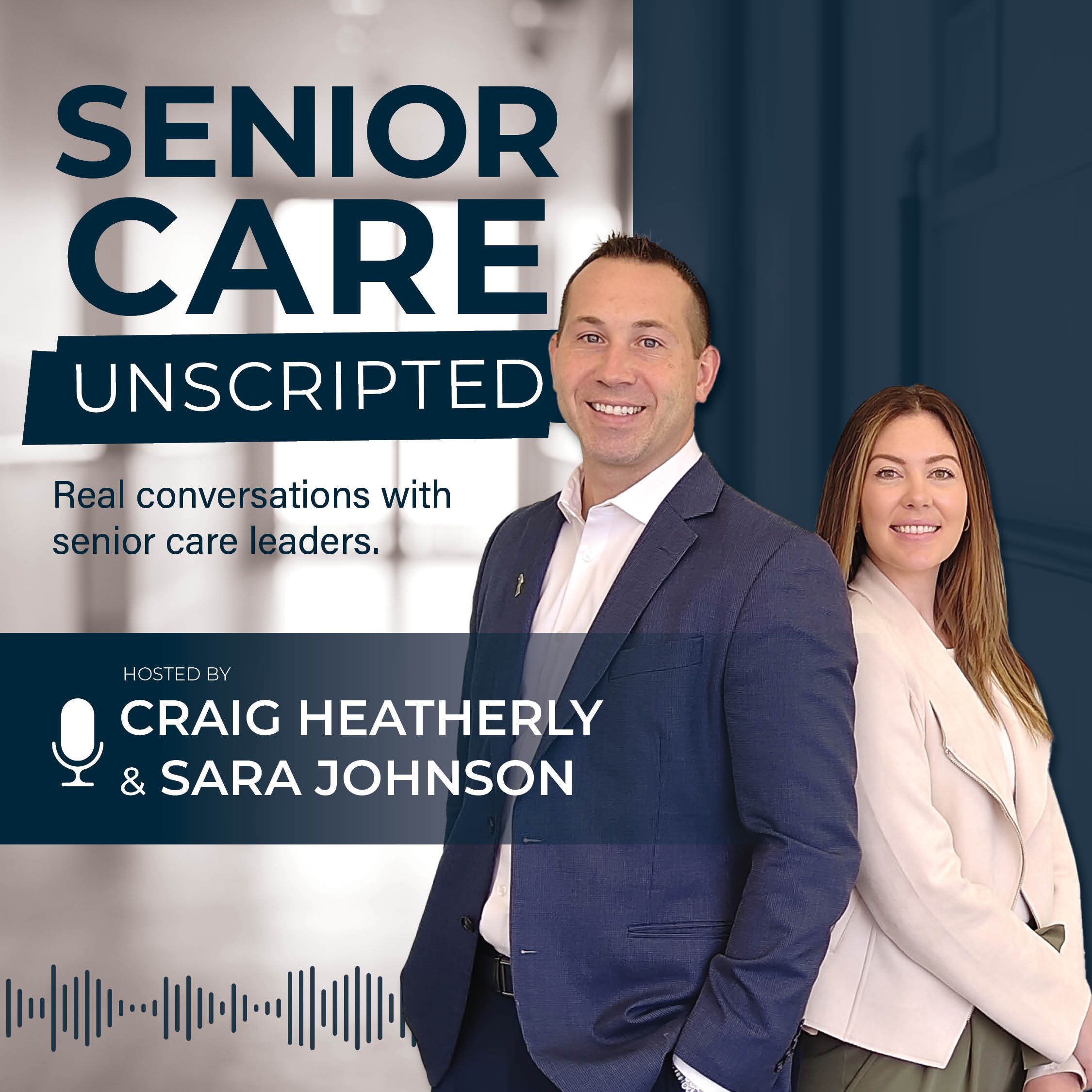
Podcast hosts and Gibson Risk Advisors, Craig Heatherly and Sara Johnson, bring together industry leaders and risk experts to discuss the risk trends affecting senior care for industry owners and operators.
If you want to understand senior living as it is actually run today, Bridge the Gap is one of the best places to start.
In senior living, the most important insights come from the people closest to the work. Operators are making difficult...
We know you strive to provide benefits that protect your employees’ well-being and financial security. One area that...
Because the market does not understand how risk is siloed inside a CCRC. A claim in SNF does not reflect the safety profile of IL or AL, but carriers often lump them together. We deconstruct the claim, isolate the exposure, and prove that it should not drive pricing campus-wide.
Because most brokers fail to explain your movement protocols, assessment processes, and handoffs. Transitions are high-risk events on paper, but fully controllable with the right systems. We show underwriters the safeguards that prevent clinical drift during level-of-care changes.
Because the multi-level structure creates more touchpoints, more handoffs, and more places where narrative gaps can occur. Documentation quality determines how a claim unfolds across the continuum. We tighten your documentation architecture so every care level reinforces the others rather than exposing them.
Yes, because they see acuity creep without understanding your internal triage safeguards. We demonstrate how your assessment protocols, escalation pathways, and transfer criteria protect residents and mitigate risk long before a claim is possible.